Electronic Minute Book: Things to Consider

Current or correction update?
July 22, 2025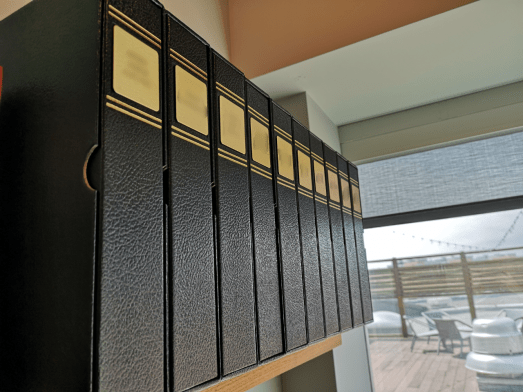
In the digital age, physical minute books are becoming increasingly obsolete, while electronic books are gradually becoming the norm. Physical books have several disadvantages: they take up a lot of space, they can be lost or destroyed without a backup copy, and they are difficult to share (for example, with your accountant or lawyer). The legislative ecosystem has changed in recent decades to legally allow companies to keep their corporate books and records in electronic format. Here are a few things to consider in this regard.
Share certificates
Companies governed by the Québec Business Corporations Act cannot legally issue electronic share certificates. The provincial law clearly states that share certificates must be in paper form. Therefore, when a digital corporate book is created, if it contains electronic certificates, these are technically invalid. The consequences of such an irregularity can be significant. Indeed, one might reasonably question whether, for example, the endorsement of a share certificate for the purpose of transferring shares is valid if the certificate itself is invalid. Thus, when a minute book is created electronically for a provincial corporation, shares should normally be issued without a certificate, as permitted by Quebec law. If electronic certificates have already been issued for a corporation, they should be regularized by printing the certificates on paper or by converting the shares into shares without certificates.
For federal corporations, there is nothing to prevent certificates from being electronic. Canadian law is silent on this point, so Quebec common law allows, in principle, for certificates to be electronic (see the Act respecting the legal framework for information technology).
Document storage support
A company that has electronic corporate books and records must decide on a medium in which to store these documents. Subscriptions to specialized platforms exist for this purpose. However, this is not mandatory, and documents can easily be stored in acloud service or even on a simple computer hard drive. Of course, the cloud has the advantage of allowing access to documents from any computer and makes sharing documents easier.
One or more files
It is common to see company books in a single PDF file. The purpose of this format is to replicate the physical minute book and its various tabs. In reality, the book (which is actually several books and several registers) can be divided into different files and folders. For example, one folder may contain the company's articles of association, another folder may contain resolutions in chronological order, etc. The disadvantage of keeping the minute book in a single file is that it is complicated to modify when it comes time to add resolutions or update its registers. In addition, when the file becomes large, it can be difficult and time-consuming to search for a specific document in the book; you then have to scroll through all the articles of incorporation, bylaws, and resolutions to find a specific resolution.